The Roundabout Road To Neon Indian's Decadent New Album

Photo by Pooneh Ghana
Neon Indian’s Alan Palomo lost what was originally supposed to become his third album. Actually, he didn’t lose it per se; it was stolen from him three years ago (vis a vis his laptop) after he drunkenly fell asleep on his own Brooklyn stoop while locked out of his apartment. It’s a story that, when I bring it up, Palomo seems already exhausted of telling, but he’s quick to point out that there’s actually a happy ending. “I don’t advocate passing out in public,” he says, “but I can see now that losing that stuff was, in the bigger picture, actually a good thing. I wouldn’t have ended up making this kind of record if I’d kept on going like I was. I needed a real break.”
Q&A: Super-Producer Glen Ballard On Jagged Little Pill, “Man In The Mirror,” & His Other Classic Recordings

Photo by Jeff Kravitz
Given that the wave of ’90s nostalgia seems to be cresting right about now, it’s only fitting that one of that decade’s most successful and culturally ubiquitous records — Alanis Morissette’s Jagged Little Pill — is now getting the proper reissue treatment. Released in 1995, when Alanis was still an unknown here in the States, the record currently ranks among the best-selling albums of all time, having sold more than 33 million copies. Not only did the record bless us with singles that, for better or worse, will forever be a part of popular consciousness — “You Oughta Know” “Ironic,” “You Learn,” “Hand In My Pocket” — it opened the floodgates for a slew of other female solo artists who would shape the latter half of that decade. Would we have had Meredith Brooks’ “Bitch” or Paula Cole’s “I Don’t Want To Wait” without Alanis? Would Sarah McLachlan have ever gotten Lilith Fair off the ground in 1997 if Alanis hadn’t basically smashed the roof off pop culture just a couple years before? Listening to it now, it’s hard to believe that Jagged Little Pill is an album that almost wasn’t. Written when Morissette was still a teenager and rejected by almost every record label at the time, the album — which was written and produced with legendary producer and studio whiz Glen Ballard — is the kind of unlikely (ironic?) success story that becomes the stuff of legend.
I Made It Through the Wilderness: On Gay Fandom, and Growing Older with Madonna

Photo by Mert & Marcus
As stereotypically gay music experiences go, you can’t go much gayer than attending the opening night of a Madonna tour. I say this fondly, and as a forty-something gay man who has seen lots of ostensibly very gay things, including but not limited to Kylie Minogue’s Fever tour, a semi-private Celine Dion concert in New York City, and multiple Erasure tours. Within the pantheon of music culture that gay men hold dear, Madonna has been serving as a defacto ambassador for nearly 30 years since. Admittedly, talking about gay diva worship in pop culture is to trade in both old stereotypes and terrible clichés, but standing outside Montreal’s Bell Centre Arena on the opening night of Madonna’s Rebel Heart tour, it’s hard not to ponder the connection, standing amid sea of excited gay men—most of them sporting Madonna shirts from previous tours, with a few of them dressed as Madge herself. A DJ outside the venue was spinning Madonna remixes and a pack of horned dancers provided "Living for Love" photo ops in front of a Rebel Heart backdrop. There were of course women, and perhaps a younger audience than expected, but Madonna’s audience of gay men is holding steady.
Shirley Manson On Garbage’s 20th Anniversary Reissue And Tour

Photo by Joseph Cultice
This month marks the 20th anniversary of Garbage’s self-titled debut, the album responsible for such ’90s megahits as “Only Happy When It Rains” and “Stupid Girl.” It’s an important record for many reasons, not the least of which is that it helped bridge the gap between noisy alternative rock and mainstream pop — incorporating everything from burgeoning electronica to buzz-saw guitars and just the slightest whiffs of trip-hoppy industrial music. If you were of college-age back in 1995, Garbage was the kind of record that everyone seemed to have some sort of relationship with — from somber gay goth boys like myself blasting “Vow” at peak volume while smoking clove cigarettes in their dorm rooms to legions of newly converted Shirley Manson acolytes aggressively dyeing their hair red and stomping around campus in combat boots and mini-dresses. Garbage was a pop record, to be sure, but it was just genre-bending and weird enough that almost anyone could access it. And unless you didn’t have access to radio and MTV, there was no way to avoid it. The LP spent more than a year haunting the US and UK charts, and eventually sold more than 4 million copies worldwide. Looking back, it’s hard to imagine another ’90s band capable of making a top 20 single called “Queer” seem like the most natural thing in the world. It’s equally impossible to imagine the ’90s without Shirley Manson, who was exactly the kind of angry pop heroine the decade so desperately needed.
FIDLAR’s Zac Carper On Kicking Drugs, Staying Punk, And Sophomore Slumps

Photo by Alice Baxley
Next month, California pop-punks FIDLAR will release Too, the follow up to their much-loved self-titled 2013 debut. As evidenced by early singles “40 Oz. On Repeat” and “West Coast” and “Drone,” the new record doesn’t scrimp when it comes to giant hooks or appropriately buzzed-out guitars, but it does add an extra layer to finesse to the band’s reliably scrappy songs. And while the band hasn’t totally abandoned the bratty goofball charm that made the first album such a fun listen, they have taken — as frontman Zac Carper describes it — some “baby steps” toward growing up. For Carper, this meant not only getting back to his roots when it came to writing new songs, but also coming to terms with the substance-abuse issues that were threatening both his life and the future of the band. I spoke with him about the new record and how getting clean has affected both his life and his music, something clearly reflected in Too album tracks like “Sober” and “Leave Me Alone,” the latter of which we are premiering here.
Bernard Sumner On New Order’s Music Complete And The Ghosts Of Manchester

Whenever a band as iconic and deeply influential as New Order decides to release a new album, it’s cause for both celebration and concern. For longtime fans (like myself), it’s exciting when a group that has profoundly shaped your musical life for the past 35 or so years decides to put something new into the world, but it’s also slightly worrisome. For those of us who have had our hopes dashed by the diminishing returns of late-career albums by the likes of Depeche Mode and the Cure — two of New Order’s very few contemporaries who are still making music — we approach the forthcoming ninth New Order LP (their first in a decade) with the overwhelming feeling of “Yes!” followed by a healthy amount of “Please, please, please don’t let this suck.” Judging from the release of “Restless” — the slick first single from Music Complete — we need not worry too much. According to frontman Bernard Sumner, the new record seeks to embrace the best of New Order’s vast history: a dance record that neatly splits the difference between guitars and synthesizers. While the band’s classic lineup has shifted since recording 2005’s Waiting For The Siren’s Call (bassist Peter Hook is out, original keyboardist and vocalist Gillian Gilbert is back in), and they enlisted a variety of friends to guest on the record (Iggy Pop, Brandon Flowers, La Roux’s Elly Jackson), there is still a very palpable feeling that Music Complete has been constructed with the notion of making a classic New Order record, something along the lines of Technique. (They even brought back design legend Peter Saville to orchestrate the packaging.) While it remains to be seen if the record can live up to all of these promises, it’s an exhilarating prospect just the same. At a time when so much popular music can be traced directly back to the roots of New Order and Joy Division, it’s cool to see those very same musicians — more than three decades later — still turning up to show everyone how it’s done.
As Much as I Can, As Black as I Am: The Queer History of Grace Jones

Photo courtesy of Daily Mail / Rex / Alamy
I wrote about Vamp as part of As Much as I Can, As Black as I Am: The Queer History of Grace Jones by Barry Walters.
Grace Jones fascinated me at a young age (seeing her as a kid while watching Conan the Destroyer with my dad both scared and excited me), but I didn’t become obsessed with her until seeing the movie Vamp at a sleepover in 1986. In the film, Jones plays Queen Katrina, a wicked vampiress running a strip club somewhere in Kansas (naturally). She makes her first on-screen appearance nude, save for a red bob wig and full body paint, doing a seductive dance that is as bizarre as it is weirdly erotic. At the time I didn’t really know much about her music (I was 11 years old and lived on a farm) nor could I appreciate that her body paint and the chair upon which she writhes were done by Keith Haring. The film is glorious ‘80s trash of the highest order, but Jones manages to transform the whole thing into high art by virtue of simply being there and, even though she’s playing the undead, sort of just being herself—beautiful, artful, exotic, and frighteningly wild.
Beyond Nostalgia: A Conversation with Deerhunter's Bradford Cox
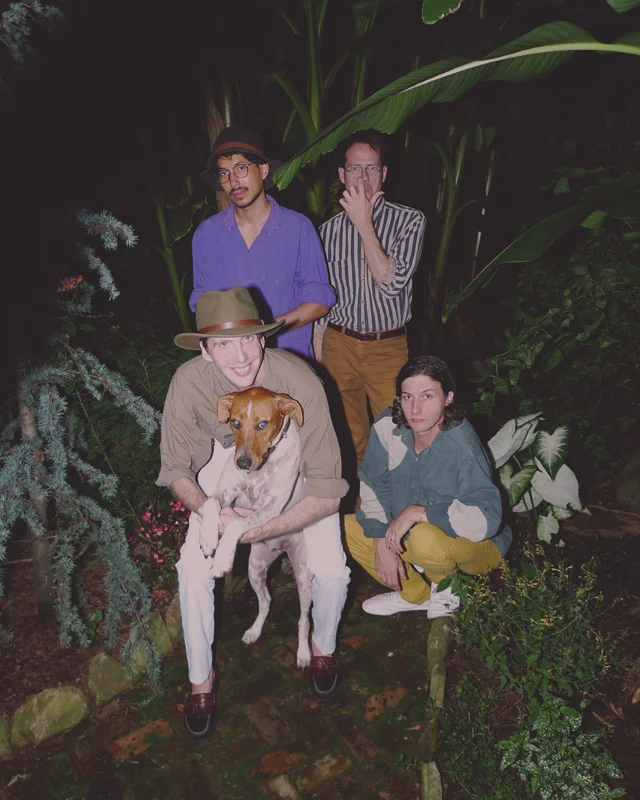
Photo by Ryan Stang
Wading through swampy Atlanta traffic en route to Bradford Cox’s home, I start to think about the first time I encountered Deerhunter face-to-face. It was at a 2007 show around the release of their breakthrough album Cryptograms in which the band essentially destroyed a tiny Brooklyn venue while Cox lurched about the stage in a dress. There was a hysterical, desperate energy—something queer in the truest sense of the word—that separated Deerhunter from all of their mid-oughts peers. Their music was equal parts noise and beauty, layers of reverb and feedback wrapped around pristine pop executions. As a frontman, Cox was both volatile and unnervingly frail. Back then, it looked as if he might collapse at any minute.
John Lydon: The lead singer of the Sex Pistols on losing his memory and finding his mojo

It’s hard to imagine what the landscape of popular music would look like without John Lydon. As the front man of the Sex Pistols, Lydon is forever emblazoned in the cultural lexicon as Johnny Rotten—the spitting, snarling antithesis to everything establishment and the forever face of punk rock. While his “Rotten” past will always be a pivotal moment in the history of rock and roll, the now 59 year-old musician is quick to point out that he is still much more than a Pistol. Last year Lydon published Anger is An Energy: My Life Uncensored, a surprisingly sentimental autobiography that details Lydon’s tumultuous childhood (including a harrowing, coma-inducing bout of meningitis at age seven that caused him to lose his entire memory), his equally volatile life with the Sex Pistols, and a sprawling career filled with controversy, music, and various stints doing everything from stunting on reality television, hosting nature programs (“John Lydon’s Shark Attack!”) and the arguably very non punk rock act of hawking Country Life butter in TV ads. This fall Lydon returns with What The World Needs Now…, an excellent new album from his other iconic band, Public Image Ltd. Given his reputation as one of the world’s great loose canons, chatting with Lydon is predictably hysterical and radically honest.
T. Cole Rachel: You’ve spent a lot of time this past year out supporting your book. Were you surprised by the way people reacted to it?
Lydon: Generally, yes. It deals with all those things in my childhood I never really wanted to be brought out into the public eye until now. The reason being, of course, I didn't want to be accused of self-pity or going for the sympathy votes and that somehow, that would've helped my career. I've had a very long career here without all of that stuff and now it's like: here's what's really going on. Have a bang at this number, babies!
Rachel: I love that about it. I know this sounds kind of preposterous, but the book is also very humanizing. I think it makes people see you in a different kind of light.
Lydon: I hope so. I haven't always had the easy life, but I'm not moaning about that. There really is no self-pity. For me, the greatest achievement in my whole life was recovering my memory. What can I tell you? Having to endure those four years of being outside myself looking in when I was a child, wondering who I really was or indeed, who anyone was, or if I even belonged anywhere or to anyone. That set me up really kind of well for the future. Without that, I don't think I could've been quite the Johnny Rotten I turned in to. My greatest achievement was that and then the Pistols and P.I.L. were just like cherries on top of a dreadful, torturous cake.
Rachel: When people meet you for the first time, are they're expecting to have the full Johnny Rotten experience?
Lydon: Which should be what?
Rachel: I don't know. Scowling, cursing, ranting…
Lydon: When you read my book, you realize there's ever so much more to that cartoon characterization that the sensationalist media headlines implied. As indeed, of course, there had to be. Nobody can be that two-dimensional. My life is not a post card.
Rachel: I just wondered if that reputation ever felt burdensome to you.
Lydon: No. I've got to say that in all of it, the negativity included, that I've got a great sense of fun that somehow in my life, I’ve basically managed to offend everybody all at once.
Rachel: You’ve lived in the U.S for a very long time now. Could you imagine living somewhere else at this point or you feel like this is definitely your home?
Lydon: No, I don't want to live anywhere else. I was shocked that America accepted me. The only reason that the American government wouldn't allow me to be a citizen for such a long time was because of the British, who kept an open file on me under the Terrorism Act.
Rachel: This new P.I.L. record is your 10th release with the band. Has your process changed much?
Lydon: No, it’s pretty ad hoc. Fly by the seat of your pants and hope that all those conversations leading up to the actual recording process were valuable and indeed, they always are. You can't make a record like we do unless communication has gone on before--and I mean in-depth self-analysis. What it is we try to do is study the human emotions-all of them, the good and the bad-- and try to find some sense of value by being honest about these things. I suppose what I'm looking for, which is what I'm always looking for in other peoples' work, is transparency-that I can see straight through to what it is they're trying to communicate. Sometimes words don't do that enough for me. There aren't enough words that are capable of expressing completely the human emotions. Sometimes has to come with sounds, texture. That being said, the classical orchestra to me is incredibly boring. It's where is the humanity? For me, the first musical instrument in all of nature is the human voice.
Rachel: How do you feel about your own voice?
Lydon: It's a work in process. It's far from perfect, but then again, it doesn't need to be. It's accurate. It accurately portrays what I'm trying to get across in the sentiment of any particular song. It affects me a great deal, performing them live, some of these songs. I'm not just talking this album, but all the way through my P.I.L. years and some of these songs break me down on stage and I will go into a full-on cry because they're so close and personal.
Rachel: In your book you are very candid discussing your own self-doubts and your fears about letting other people down. A lot of people wouldn’t think that about you, given how outrageously self-assured you’ve always seemed.
Lydon: It'll always be there. A lot of people avoid the issues of self-doubt through, well, drugs like heroin-the greatest substitute for that, but nothing good comes out of you on drugs. You lose your soul. I found that fear and self-loathing and all of these things that are wrapped around self-doubt to be actually useful tools. What that is is your body and your mind telling you to get ready to deliver something genuine.
Rachel: Writing a massive memoir requires you to go back and really examine your life, for better or worse. Was that hard for you?
Lydon: Let's say I didn't do it with rose-colored glasses. It's painful sometimes, but it's there and it exists. I lost my memory for something like four years. That was very, very painful, that sense of isolation. I was a walking zombie and feeling I belonged to no one and I didn't know why. I resolved that and that's why I will never tell a lie to people. I can't stand it, because I know what it's like to have to endure a lie and believe in it because you're so desperate to believe in anything at all that anybody tells you in order to find yourself. Don't lie. Don't inflict that on your fellow human beings.
Rachel: You’ll be on tour for much of this year. Are you excited?
Lydon: Yes, I am. I really like to push myself to the utmost Nth degree and drive myself almost slavishly to make up for those periods of indolence, which some might call a holiday. It's an odd thing with me; I'm like the world's laziest workaholic.
Rachel: That's good though.
Lydon: That's the influence of mom and dad. My mom, she couldn't care if the house fell down around her, and my dad, he'd be up at 4:30 every morning, no matter what, and he'd have to be brushing or cleaning or banging about for some reason and then off to work. He'd come home and he'd do the same thing all over again and go to bed for four to six hours, at most, and back at it. I've got a bit of both of them in me. It's in time you recognize these things, but in particular, once they've died and you really see them in you. Your parents never really die, they're constantly in there. I know my mom and dad are constantly telling me, "Get up, you lazy cunt…and don't tell no lies!"
The original version of this story first appeared in Man of the World No. 13
THE NOTORIOUSLY ELUSIVE JONI MITCHELL OPENS UP ABOUT HER INCREDIBLE NEW UNDERTAKING, AND WHY SHE’LL BE THE ONLY ONE WHO TELLS HER OWN LIFE STORY

photo by Hedi Slimane
Before I can dive headlong into a conversation with Joni Mitchell, there are a few things that the 71-year-old icon needs to clear up. “You aren’t going to call me a folksinger, are you?” she asks. “You aren’t going to say that I’m like the female Bob Dylan—or worse—a singer-songwriter, are you?” It’s a jarring way to begin an interview, but in Mitchell’s case a totally understandable one. Although she is one of the most celebrated artists of the 20th century, Mitchell remains deeply misunderstood. Some will always see her as the sunny-haired, dulcimer-playing folk naïf of “California” and “Both Sides Now” but Mitchell’s body of work—a back catalog 19 albums deep—is unlike any other in popular music. Her sense of harmonics, innovative song structures, and uncanny take on jazz remain totally singular. Given the scope of her influence, Mitchell has earned the right to be a little thorny when it comes to the subject of her legacy. “I’m liable in interviews to get frustrated and become stupidly boastful,” she says. “I just want things to be acknowledged. It’s like, don’t make me say it.“