The Anniversary On Reuniting, Getting Ripped Off By Limp Bizkit, And The Emo Label

CREDIT: Zach Bauman
Over this past Memorial Day weekend, four of the original members of the Anniversary — the much-beloved band from Lawrence, Kansas — reconvened to rehearse a few of their old songs. This would be the first time that the four of them — Josh Berwanger, James David, Adrianne DeLanda, and Chris Jankowski — had been in one room together since the band awkwardly and officially broke up back in 2004. It was a reunion that no one ever really seemed to think would happen. Having parted ways well over a decade ago, most of the band now live in different parts of the country and literally everyone has children, which makes the idea of getting everyone back together in a room to play songs that were written when most of them were barely out of their teens seem not only logistically difficult, but financially and commercially implausible. Still, after several months of chatting and testing the waters (everyone seemed genuinely surprised by the almost cult-classic status of their records), four of the original five band members managed to clear their schedules for a spate of reunion shows that will take place this fall. (Fifth original member, guitarist Justin Roelofs, isn’t currently involved, though he encouraged the other members to proceed with the reunion. Ricky Salthouse will be joining the band on guitar for the upcoming shows.) Fittingly, the reunion took place in same place the band first played together back in 1997 — the basement at guitarist Josh Berwanger’s mom’s house.
Rufus Wainwright and Judy Garland--Together Again

Photo by Brad Ogbonna
Back in 2006, I had the pleasure of seeing Rufus Wainwright perform Rufus Does Judy at Carnegie Hall, which, for a young gay man still high on the fumes of being relatively new to New York, was a kind of watershed moment. Arguably our only proudly “out” pop star at the time (even now we really only have two or three), Wainwright gleefully recreating Judy Garland’s iconic 1961 live performance felt like a revelation.
For those of us whose experience of being gay was either negated entirely by the institutions in place, or who had witnessed the renegade joy of gay culture being almost entirely quelled by the specter of AIDS, Wainwright’s performance was not only a celebration of Garland’s life (and the great American songbook), but also a testament to what it meant to be gay and alive. Equal parts serious homage and camp spectacle, the unbridled joie de vivre of the show was a much needed shot in the arm—a not so subtle reminder of the importance of embracing not only our history, but joy itself.
Now, an impossible-seeming decade later, Wainwright is once again reviving Garland’s opus, performing the show for two nights this month, on June 16 and 17, at Carnegie Hall. Though he’s confident that he can still sing the songs (and perhaps even better now), Wainwright is the first to admit that he is a much different person than he was 10 years ago. Over the course of the past decade he has experienced great joy—he married his longtime partner, and fathered a child—and no small amount of sadness, especially the loss of his mother, the late, great singer Kate McGarrigle.
Wainwright has also piloted a wonderfully unpredictable route creatively, having now released eight studio albums and one opera, 2009’s Prima Donna. His latest release, Take All My Loves: 9 Shakespeare Sonnets, not only sets some of the Bard’s greatest work to music, but also includes contributions from the likes of Helena Bonham Carter, William Shatner, and Florence Welch. His second proper opera, Hadrian (a take on the gay love story surrounding Greek emperor Hadrian), will open at Toronto’s Canadian Opera Company in 2018. It’s hard to imagine another contemporary artist, particularly one who entered the cultural arena as a young pop star, with such a wildly disparate catalog of work. But somehow with Wainwright, all of these things—pop music, opera, Shakespeare, Judy Garland—make sense together.
When I spoke to Wainwright on the phone as he prepared to begin rehearsals, he connected his wide-ranging output as a simple byproduct of growing older. “I think it’s a thing that happens to people in their 40s,” he explained. “You really get this sense of like, ‘This is it, baby.’ I don’t want to waste time.”
A few days later, I ran into Wainwright at the closing night of Kiki and Herb’s show at Joe’s Pub. When I ask him if he was feeling anxious about his upcoming dates, Wainwright was characteristically flip. “I’m really not that nervous about singing the songs,” he told me. “I’m just nervous about the shows selling out. I need to know there’s a full house if I’m gonna get up there and do this again. Please! I need everyone to buy a ticket!”
Steve Gunn
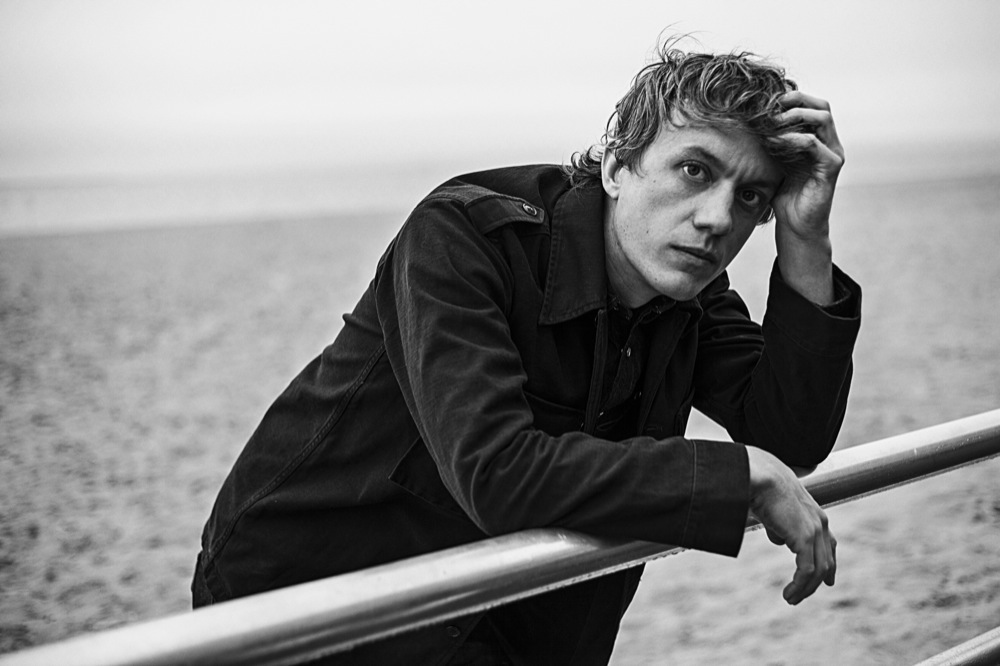
photo by Victoria Stevens
Steve Gunn makes music that feels like it was tailor-made for road trips—expansive, panoramic, full of twists and sharp left turns. A gifted guitarist and clever songwriter, the Brooklyn-based musician has been honing his craft for years, writing and recording with the likes of Hiss Golden Messenger, Mike Cooper, The Black Twig Pickers, and playing in Kurt Vile's band, The Violators. Since releasing his first solo album in 2007, Gunn's sonic palette has gradually expanded from lo-fi home recordings made alone in his bedroom into kaleidoscopic, full-band productions. His songs coolly blur the line between gentle singer/songwriter fare and noodly psychedelia while also giving passing nods to winsome folk music and Grateful Dead-worthy stoner jams. His music, much like the narratives in his songs, contains multitudes.
Q&A: Julianna Barwick
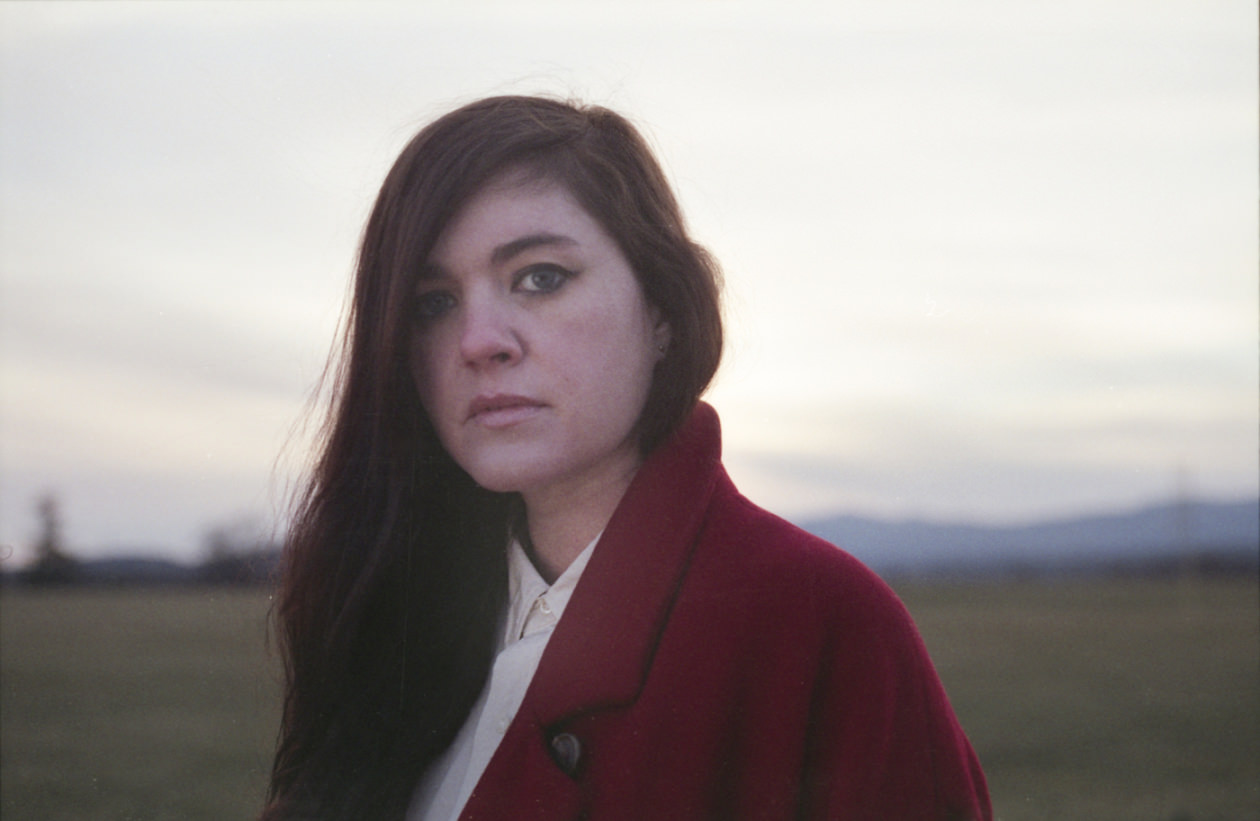
Photo by Zia Anger
For nearly a decade now, Julianna Barwick has made a career out of articulating the ineffable. The New York artist’s songs are built out of competing clouds of voice—her own—looped, processed, reverbed, and filtered through what sounds like some kind of divine light. Over the course of three progressively more sanguine full-length albums, Barwick has built upon her strengths, slowly adding layers of production finesse as well as deftly-employed instrumentation—synths, cello, drums—to augment her ephemeral sound.
Her newest album, Will, is also her most curiously dynamic. Recorded in fits and starts between upstate New York, the Moog Factory in Asheville, North Carolina, and Lisbon, Portugal, the record also includes contributions from Mas Ysa’s Thomas Arsenault, Dutch cellist Maarten Vos, and percussionist Jamie Ingalls. Will all but eschews conventional song structure in favor of compositions that move and mutate like cyclical, natural forms—collages of sound that build and retreat with the sonic quality of fog—a delicate mass composed entirely of soft edges. While the record certainly bears some of the hallmarks of Barwicks earlier work, Will skews slightly darker in tone, adding textural elements like more pronounced synth sounds, additional human voices, and in the case of album closer “See, Know,” actual drums.
Given the nature of her music, Barwick has grown accustomed to weird expectations. “I think people assume I’m just like some weird lady who lives in a tree or something,” she jokes when we meet up for lunch in Brooklyn. In reality, Barwick has spent the better part of the last three years continuously on the move. Spending time with her, it’s clear that her music—much of her life, actually—is deeply rooted in natural curiosity that was informed by a childhood spent singing in church choirs and a lifelong affinity with the nature.
Though she takes her work very seriously, Barwick also has a funny sense of humor about it. “I’m not this gentle fairy creature person,” she tells me. “I like to be mischievous and I love funny stuff. I get that what I do is kind of weird and not everyone is gonna get it, but I’m really not some super boring New Age person…I hope.”
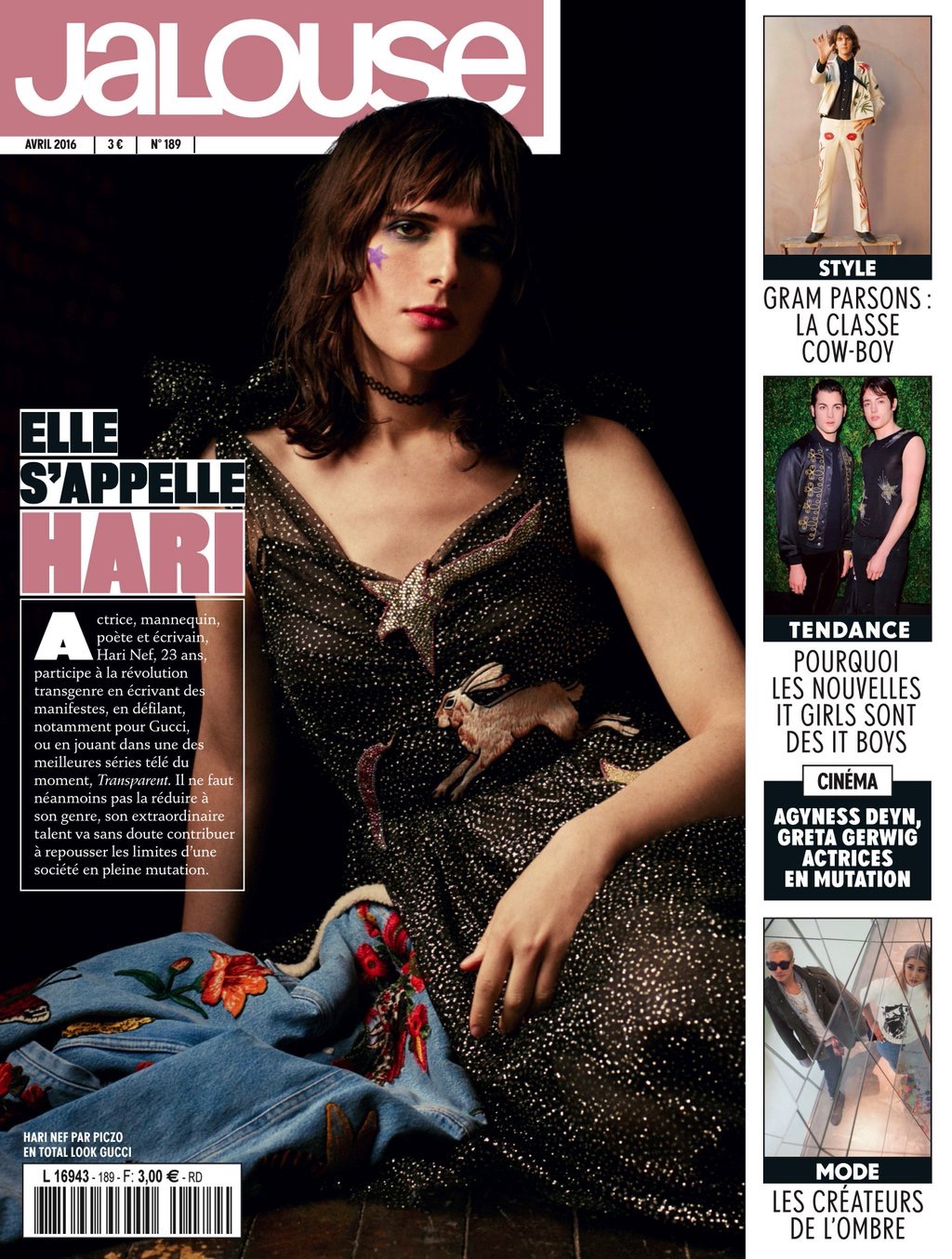
Hari Nef: Model, Actress, Muse

from Issue 189 of Jalouse
It’s been a rollercoaster year for Hari Nef. In May of 2015 the 23 year-old actress and model signed a contract with IMG Models (the very same month she graduated from the theater program at NYC’s Columbia University) , making her the first transgender model signed to their roster. She has set runways alight for the likes of Adam Selman, VFiles, and Gucci while her writing on sex, gender, and identity graced the pages of Dazed, Vice, Blackbook and Adult. Just as her star in the fashion world and her reputation as the new doyenne of downtown NYC continued to rise she was cast in the second season of Transparent, tackling the role of a tragically doomed German cross-dresser with incredible aplomb that it appeared as if the role had been written especially for her (and it was). Though she is happy to serve as both an inspiration and muse for trans people everywhere, she is quick to point out that there is much more to her appeal than just her gender and her almost preternatural sense of style. “I have a lot more to offer to you than an identity and a body,” she says. “I have perspective and I have talent-- those exist on their own.”
T Cole Rachel: Were you a super performative kid? Did you always want to be an actress?
Hari Nef: Oh yes. I'm still a super performative kid. I always wanted people to understand me and feel what I was feeling and see what I was seeing. I guess performativity was just something that I sort of harnessed to translate myself to all of these people I had in my life.
Rachel: You’ve been very open about your experiences as a trans woman and I’m sure there is a certain amount of pressure on you to be a representative of the trans community. For trans people in the public eye, there is always this intense fixation on gender and presentation. Is it your hope that eventually people will start to fixate less on that part of your life?
Hari Nef: I hope it will. I'm just happy to be here, happy to be working. If people are still asking me the same things that they're asking me now in five years, I'm going to start to get a little worried, because I'm going to be bored. And I hope that this becomes boring for people. I hope that after a certain amount of education and discourse is sort of disseminated throughout the world that we can move forward, because everybody is asking me these questions under this supposition that we need to educate people, and I believe that's true. We need to deconstruct stigmas about bodies and identities. I don't feel like it's going to happen overnight, but at the risk of sounding arrogant, I'll say I have a lot more to offer to you than an identity and a body. I have perspective and I have talent, and those things--while perhaps inextricably informed and enmeshed in my lived experiences as a trans woman and many other myriad identities I carry-- those exist on their own. I'm a trans model, I'm a trans actress. I'm also a model and I'm also an actress.
Rachel: As trans people continue to become more visible in popular culture, there’s a hope that one day it won’t be seen as such an anomaly.
Hari Nef: I feel like as the word transgender is starting to be defined for people by popular culture, but If you're only looking at five people to represent an entire community, you need to understand that there are armies of people on the trans spectrum that do not resemble these folks that are your reference points, that do not have the same lived experiences as your reference points, who do not identify along the same gender binary as your reference points. Being trans is not about, "I was born one way but now I identify as another way." It's really about this idea of gender fluidity and being able to look at someone who is gender variant to any extent and affirm their identity. It's not just about binary trans women, or binary trans men, or people who have medically transitioned or had certain either feminizing or masculinizing procedures or whatever. It's less about the people you're seeing and more about the way you see people.
Rachel: Thinking about this past year, what have been the biggest surprises for you?
Hari Nef: Things that have happened to me or things that I've done, like signing a worldwide modeling contract with IMG, making my acting debut on Transparent, walking the Gucci show. I never expected that any of this would happen to me. Maybe there was a certain sense that I thought that maybe I could take my talent somewhere, but especially after coming to terms with my gender identity and a lot of the pain that was associated with that, all of my dreams came true right at the moment I was sort of becoming comfortable with giving up on my dreams. Understanding that my gender variance is probably going to make things very difficult for me, and understanding that there were so few precedents for people with my body and my identity doing the things that I wanted to do, that I should never ever bank on doing them…and then a bunch of them happened anyway. That was the biggest surprise, because I didn't expect it and neither did anybody else. Before I signed with IMG, every other agency--literally every other one--either wouldn't even meet with me or just straight up wouldn't sign me. This was not a sure thing, for anybody, much less me. Just the fact that I'm even sitting here is a surprise to me still.
Rachel: In terms of acting, do you have a dream project?
Hari Nef: I would love to play Lady Macbeth. I would love to play Stella in A Streetcar Named Desire. I would love to play Candy Darling in a biopic. Or Patti Smith! There are dream roles out there, but because I don't bank on getting those roles, my big dream is to write for myself and to create a role that I can embody. I feel and think this a lot of the time, but a lot of my fellow trans girls just say it straight up, "None of this shit is made for us. These clothes aren't made for us, these movies aren't made for us, this shit is not made for us, and people don't want us around." They look at me and say, "Okay, little Ivy League white girl, you got through the door, good for you. We love you, but your inhabiting this space doesn't necessarily mean that they want any more of us in there than there already are." So I try to have an open heart about my collaborations, but there is a part of me that has these voices going through me, that none of this shit is made for me. Sometimes you have to make something for yourself.
DEV HYNES OPENS UP ABOUT NEW BLOOD ORANGE ALBUM

Photo by Jason Nocito
DEV HYNES IS EVERYWHERE, BUT WHERE HAS BLOOD ORANGE BEEN? THE ARTIST EVERYONE IS AFTER OFFERS INSIGHT INTO HIS MOST INTIMATE—AND MAYBE BEST—RECORD YET
By Being Sincere, Parquet Courts Made Their Best Album Yet

Photo: Ben Rayner
A talk with singer and guitarist Andrew Savage about Human Performance and what it means to be a functioning, feeling person who also plays in a rock band.
Q&A: Lush On Their Unusual Legacy & Exciting Reunion
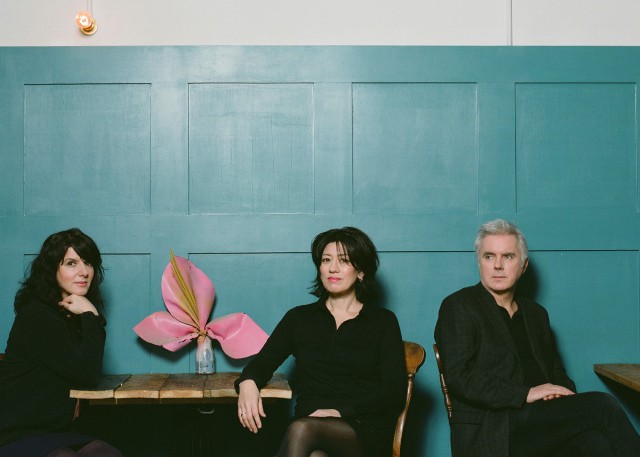
Of all the shoegaze reunions that we’ve been blessed with over the past few years, perhaps none is more satisfying than the return of Lush. Unlike many of their ’90s peers, most of whom either fizzled out due to lack of interest or were forced to close up shop for financial reasons, Lush ended their run on something of a creative high note. Between 1989 and 1996 the band released four increasingly pop-friendly albums, the last of which — 1996’s Lovelife — neatly bridged the gap between hazy shoegaze and the prevailing Britpop of the mid ’90s. At a time when Lush were poised to achieve even greater mainstream success, drummer Chris Acland tragically took his own life. Exhausted and heartbroken, the band simply stopped. So, for all of us who came of age with their records (and may or may not still have old VHS copies of 120 Minutes that are permanently warped from watching the “Sweetness And Light” video over and over), the news that Lush will reform after a 20-year hiatus is truly glorious. Having announced a run of U.S. shows leading up to a performance at Coachella later this month, the band is also releasing a new EP, Blind Spot — four tracks of blissed-out dreampop that picks up seamlessly where they left off nearly two decades ago. We talked to Lush frontwomen Emma Anderson and Miki Berenyi about the band’s great early days as well as their genuinely exciting comeback.
Q&A: Ben Watt On Using Twitter To Meet Marissa Nadler, Why He Doesn’t Want To Reunite Everything But The Girl, And His Beautiful New LP

CREDIT: Tom Sheehan
Few artists can boast a career as varied and oddly sprawling as that of Ben Watt. After releasing an acclaimed solo record in 1983, Watt would subsequently spend the next 16 years as one half of Everything But The Girl (with his now-wife Tracey Thorn), who eventually recorded nine albums before quietly going into what may or may not be a permanent hiatus. Watt would then delve into the world of electronic music for a decade or so, launching his own electronic label (Buzzin’ Fly) and traveling around the world as a highly sought-after DJ. In 2014 Watt once again made an abrupt left turn and decided to get back to his first love: writing and singing his own songs. Hendra — his first solo album in 31 years — was a critically beloved return to form, allowing Watt to once again take center stage and cementing what has become an enduring partnership with former Suede guitarist Bernard Butler. This month Watt will release Fever Dream, a graceful collection of songs largely concerned with aging and relationships featuring contributions from Marissa Nadler and M.C. Taylor of Hiss Golden Messenger. It’s also worth noting that in addition to having written and recorded some of the greatest music of the past couple of decades, Watt has also written two excellent memoirs (1996’s Patient and 2014’s Romany And Tom), which means he can essentially do pretty much anything.
Will Oldham's Fourth Dimension

PHOTO COURTESY OF TODD BRASHEAR
For the better part of 23 years now, Will Oldham—better known these days by his chosen nom de plume, Bonnie 'Prince' Billy—has released music that has both celebrated and playfully subverted American musical traditions. To say that he is a folk musician or that the music he records qualifies as "Americana" would be a misnomer, as his music toys with these ideas and transcends them. Over the past two decades he has released nearly 20 albums (under the monikers of Palace Brothers, Palace Music, Bonnie 'Prince' Billy, and Will Oldham), worked as a film and theater actor (his turn in Kelly Reichardt's 2006 film Old Joy is particularly fantastic), and generally floated around the edges of popular culture in ways one might not expect (such as having his songs covered by the late Johnny Cash, making a cameo appearance in R. Kelly's "Trapped in the Closet" video).
In short, Will Oldham is equally talented and inscrutable, the kind of wonderfully gifted and gently eccentric artist that one encounters all too rarely these days. And though he is generally reticent in interviews, when he does sit down to talk he is always interesting. We caught up with Oldham in New York City, where he is currently appearing at BAM in the Actors Theater of Louisville's production of Charles Mee's The Glory of the World. Ostensibly we're meant to chat about Pond Scum, a newly released compilation of old Peel Sessions Oldham recorded over the years, some dating back to as early as 1993. Though there is a certain schizophrenic quality to Pond Scum (Oldham recorded six Peel Sessions for BBC Radio over the years, three of which are represented here) it does provide a fascinating window into his psyche and his ever-evolving body of work.