The Anniversary On Reuniting, Getting Ripped Off By Limp Bizkit, And The Emo Label

CREDIT: Zach Bauman
Over this past Memorial Day weekend, four of the original members of the Anniversary — the much-beloved band from Lawrence, Kansas — reconvened to rehearse a few of their old songs. This would be the first time that the four of them — Josh Berwanger, James David, Adrianne DeLanda, and Chris Jankowski — had been in one room together since the band awkwardly and officially broke up back in 2004. It was a reunion that no one ever really seemed to think would happen. Having parted ways well over a decade ago, most of the band now live in different parts of the country and literally everyone has children, which makes the idea of getting everyone back together in a room to play songs that were written when most of them were barely out of their teens seem not only logistically difficult, but financially and commercially implausible. Still, after several months of chatting and testing the waters (everyone seemed genuinely surprised by the almost cult-classic status of their records), four of the original five band members managed to clear their schedules for a spate of reunion shows that will take place this fall. (Fifth original member, guitarist Justin Roelofs, isn’t currently involved, though he encouraged the other members to proceed with the reunion. Ricky Salthouse will be joining the band on guitar for the upcoming shows.) Fittingly, the reunion took place in same place the band first played together back in 1997 — the basement at guitarist Josh Berwanger’s mom’s house.
Q&A: Lush On Their Unusual Legacy & Exciting Reunion
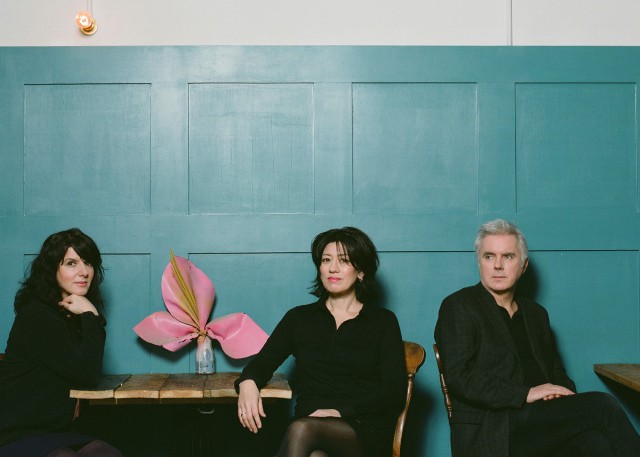
Of all the shoegaze reunions that we’ve been blessed with over the past few years, perhaps none is more satisfying than the return of Lush. Unlike many of their ’90s peers, most of whom either fizzled out due to lack of interest or were forced to close up shop for financial reasons, Lush ended their run on something of a creative high note. Between 1989 and 1996 the band released four increasingly pop-friendly albums, the last of which — 1996’s Lovelife — neatly bridged the gap between hazy shoegaze and the prevailing Britpop of the mid ’90s. At a time when Lush were poised to achieve even greater mainstream success, drummer Chris Acland tragically took his own life. Exhausted and heartbroken, the band simply stopped. So, for all of us who came of age with their records (and may or may not still have old VHS copies of 120 Minutes that are permanently warped from watching the “Sweetness And Light” video over and over), the news that Lush will reform after a 20-year hiatus is truly glorious. Having announced a run of U.S. shows leading up to a performance at Coachella later this month, the band is also releasing a new EP, Blind Spot — four tracks of blissed-out dreampop that picks up seamlessly where they left off nearly two decades ago. We talked to Lush frontwomen Emma Anderson and Miki Berenyi about the band’s great early days as well as their genuinely exciting comeback.
Q&A: Ben Watt On Using Twitter To Meet Marissa Nadler, Why He Doesn’t Want To Reunite Everything But The Girl, And His Beautiful New LP

CREDIT: Tom Sheehan
Few artists can boast a career as varied and oddly sprawling as that of Ben Watt. After releasing an acclaimed solo record in 1983, Watt would subsequently spend the next 16 years as one half of Everything But The Girl (with his now-wife Tracey Thorn), who eventually recorded nine albums before quietly going into what may or may not be a permanent hiatus. Watt would then delve into the world of electronic music for a decade or so, launching his own electronic label (Buzzin’ Fly) and traveling around the world as a highly sought-after DJ. In 2014 Watt once again made an abrupt left turn and decided to get back to his first love: writing and singing his own songs. Hendra — his first solo album in 31 years — was a critically beloved return to form, allowing Watt to once again take center stage and cementing what has become an enduring partnership with former Suede guitarist Bernard Butler. This month Watt will release Fever Dream, a graceful collection of songs largely concerned with aging and relationships featuring contributions from Marissa Nadler and M.C. Taylor of Hiss Golden Messenger. It’s also worth noting that in addition to having written and recorded some of the greatest music of the past couple of decades, Watt has also written two excellent memoirs (1996’s Patient and 2014’s Romany And Tom), which means he can essentially do pretty much anything.
Report from São Miguel's Tremor Festival

CREDIT: Joana Camilo
Now in its third year, the Tremor Festival takes place on the island of São Miguel in the Azores — a place that, quite frankly, I didn’t even know existed until I was asked to go there. Located in the middle of the North Atlantic Ocean, the Azores is a Portuguese archipelago — approximately halfway between Lisbon and New York City — though most Portuguese people I know have never even been there. Up until a year ago the nine islands that make up the Azores were only serviced by one airline, which made getting to and from the islands prohibitively expensive. Now that the island is serviced by multiple carriers, it’s easy — and relatively cheap — to fly there. Just a four and a half hour flight from Boston, Azores is like this crazy volcanic paradise that you never knew you wanted to visit and that you Now in its third year, the Tremor festival takes place on the island of São Miguel in the Azores — a place that, quite frankly, I didn’t even know existed until I was asked to go there. Located in the middle of the North Atlantic Ocean, the Azores is a Portuguese archipelago — approximately halfway between Lisbon and New York City — though most Portuguese people I know have never even been there. Up until a year ago the nine islands that make up the Azores were only serviced by one airline, which made getting to and from the islands prohibitively expensive. Now that the island is serviced by multiple carriers, it’s easy — and relatively cheap — to fly there. Just a four and a half hour flight from Boston, Azores is like this crazy volcanic paradise that you never knew you wanted to visit and that you basically never want to leave.
Tortoise On The Catastrophist & The Process Of Making Music Without Limitations

photo by Andew Painter
For those of us who came of age in the early ’90s, Tortoise — Chicago’s iconic post-rock granddaddies — were a kind of gateway drug for what could be ostensibly deemed “experimental” music. The band’s landmark 1996 release, Millions Now Living Will Never Die, provided, for me at least, essential first contact with what was essentially genre-less instrumental music — a discovery that would eventually lead me to seeking out things like Can, Neu!, and Sonny Sharrock. And even though Tortoise have always been generally slotted under the vague banner of “post-rock” their back catalog — now seven albums deep — is pretty singular. Jazz-inflected and imbued with elements of rock, dub, and ambient electronica, their music has, for the better part of 25 years, remained wonderfully inscrutable. The same is true of the band’s forthcoming full-length, The Catastrophist, which might actually be their most weirdly adventurous to date. The LP includes funk-appropriate basslines, feather-light interplaying guitars, and a variety of otherworldly synthed-out instrumentals. Perhaps weirdest of all, the album includes a cover of David Essex’s 1973 pop hit “Rock On,” which the band manages to make sound oddly ominous. Elsewhere, Yo La Tengo’s Georgia Hubley shows up to add vocals to “Yonder Blue,” which is perhaps one of the loveliest songs the band has ever recorded. In other hands, so many disparate elements and influences might sound like a crazy mess, but The Catastrophist has the same kind of measured, sanguine quality that has been the hallmark of almost every Tortoise album. None of this should make sense, but for some reason all of it does. I talked to Tortoise drummer John McEntire and guitarist Jeff Parker about The Catastrophist and how they got here. And before you get to that, you can listen to “Rock On.”
Joanna Newsom On Moving Rocks, Annotating Lyrics, And Playing The Hits

Photo by Annabel Mehran
Given the nature of her work — the intricate arrangements; the complicated, often byzantine lyrics; the harp; that extraordinarily wild voice — it’s not surprising that Joanna Newsom has managed to engender such a devoted fan base. She is the very definition of a “singular” artist — someone whose work is totally unmistakable as belonging to anyone else. Over the course of three increasingly challenging full-length releases, Newsom has risen from the ranks of twee freak-folkster to something resembling a kind of rarefied rock stardom (or as close as one can come to such a thing in the world of indie rock). Her last record, 2010’s Have One On Me, was a three-disc behemoth of beautifully knotty songs about love and friendship and the occasional jackrabbit, which was somehow still less challenging than 2006’s Ys, her Van Dyke Parks-arranged extravaganza that boasted songs that regularly twirled past the 10-minute mark and pushed Newsom’s love of winding narratives to dizzying new levels. This being said, Newsom’s music, while always fascinating, is admittedly not for everyone. Her work should ostensibly be the kind of material destined only to guarantee lifetime status as a cult figure, but for whatever reasons — her uncanny charisma and profound talent among them — people have been willing to follow Joanna Newsom wherever she has seen fit to go. Her new album, Divers, should only deepen her fan base. The record is no less ornate than previous efforts, but with only 11 tracks, it’s a much more digestible affair. The production is predictably lush (including contributions from Nico Muhly and Dave Longstreth), and the songs still sprawl in a million fascinating directions, roaming across narratives involving everything from pearl divers and goose eggs to ancient tobacco settlements. However, there is a clarity of vision and a heightened melodicism at play on Divers that makes the record slightly easier to tackle than her last two releases, even though the repeated listens and slow process of unpacking is often what makes Joanna Newsome records so fascinating.
Q&A: Super-Producer Glen Ballard On Jagged Little Pill, “Man In The Mirror,” & His Other Classic Recordings

Photo by Jeff Kravitz
Given that the wave of ’90s nostalgia seems to be cresting right about now, it’s only fitting that one of that decade’s most successful and culturally ubiquitous records — Alanis Morissette’s Jagged Little Pill — is now getting the proper reissue treatment. Released in 1995, when Alanis was still an unknown here in the States, the record currently ranks among the best-selling albums of all time, having sold more than 33 million copies. Not only did the record bless us with singles that, for better or worse, will forever be a part of popular consciousness — “You Oughta Know” “Ironic,” “You Learn,” “Hand In My Pocket” — it opened the floodgates for a slew of other female solo artists who would shape the latter half of that decade. Would we have had Meredith Brooks’ “Bitch” or Paula Cole’s “I Don’t Want To Wait” without Alanis? Would Sarah McLachlan have ever gotten Lilith Fair off the ground in 1997 if Alanis hadn’t basically smashed the roof off pop culture just a couple years before? Listening to it now, it’s hard to believe that Jagged Little Pill is an album that almost wasn’t. Written when Morissette was still a teenager and rejected by almost every record label at the time, the album — which was written and produced with legendary producer and studio whiz Glen Ballard — is the kind of unlikely (ironic?) success story that becomes the stuff of legend.
Shirley Manson On Garbage’s 20th Anniversary Reissue And Tour

Photo by Joseph Cultice
This month marks the 20th anniversary of Garbage’s self-titled debut, the album responsible for such ’90s megahits as “Only Happy When It Rains” and “Stupid Girl.” It’s an important record for many reasons, not the least of which is that it helped bridge the gap between noisy alternative rock and mainstream pop — incorporating everything from burgeoning electronica to buzz-saw guitars and just the slightest whiffs of trip-hoppy industrial music. If you were of college-age back in 1995, Garbage was the kind of record that everyone seemed to have some sort of relationship with — from somber gay goth boys like myself blasting “Vow” at peak volume while smoking clove cigarettes in their dorm rooms to legions of newly converted Shirley Manson acolytes aggressively dyeing their hair red and stomping around campus in combat boots and mini-dresses. Garbage was a pop record, to be sure, but it was just genre-bending and weird enough that almost anyone could access it. And unless you didn’t have access to radio and MTV, there was no way to avoid it. The LP spent more than a year haunting the US and UK charts, and eventually sold more than 4 million copies worldwide. Looking back, it’s hard to imagine another ’90s band capable of making a top 20 single called “Queer” seem like the most natural thing in the world. It’s equally impossible to imagine the ’90s without Shirley Manson, who was exactly the kind of angry pop heroine the decade so desperately needed.
FIDLAR’s Zac Carper On Kicking Drugs, Staying Punk, And Sophomore Slumps

Photo by Alice Baxley
Next month, California pop-punks FIDLAR will release Too, the follow up to their much-loved self-titled 2013 debut. As evidenced by early singles “40 Oz. On Repeat” and “West Coast” and “Drone,” the new record doesn’t scrimp when it comes to giant hooks or appropriately buzzed-out guitars, but it does add an extra layer to finesse to the band’s reliably scrappy songs. And while the band hasn’t totally abandoned the bratty goofball charm that made the first album such a fun listen, they have taken — as frontman Zac Carper describes it — some “baby steps” toward growing up. For Carper, this meant not only getting back to his roots when it came to writing new songs, but also coming to terms with the substance-abuse issues that were threatening both his life and the future of the band. I spoke with him about the new record and how getting clean has affected both his life and his music, something clearly reflected in Too album tracks like “Sober” and “Leave Me Alone,” the latter of which we are premiering here.
Bernard Sumner On New Order’s Music Complete And The Ghosts Of Manchester

Whenever a band as iconic and deeply influential as New Order decides to release a new album, it’s cause for both celebration and concern. For longtime fans (like myself), it’s exciting when a group that has profoundly shaped your musical life for the past 35 or so years decides to put something new into the world, but it’s also slightly worrisome. For those of us who have had our hopes dashed by the diminishing returns of late-career albums by the likes of Depeche Mode and the Cure — two of New Order’s very few contemporaries who are still making music — we approach the forthcoming ninth New Order LP (their first in a decade) with the overwhelming feeling of “Yes!” followed by a healthy amount of “Please, please, please don’t let this suck.” Judging from the release of “Restless” — the slick first single from Music Complete — we need not worry too much. According to frontman Bernard Sumner, the new record seeks to embrace the best of New Order’s vast history: a dance record that neatly splits the difference between guitars and synthesizers. While the band’s classic lineup has shifted since recording 2005’s Waiting For The Siren’s Call (bassist Peter Hook is out, original keyboardist and vocalist Gillian Gilbert is back in), and they enlisted a variety of friends to guest on the record (Iggy Pop, Brandon Flowers, La Roux’s Elly Jackson), there is still a very palpable feeling that Music Complete has been constructed with the notion of making a classic New Order record, something along the lines of Technique. (They even brought back design legend Peter Saville to orchestrate the packaging.) While it remains to be seen if the record can live up to all of these promises, it’s an exhilarating prospect just the same. At a time when so much popular music can be traced directly back to the roots of New Order and Joy Division, it’s cool to see those very same musicians — more than three decades later — still turning up to show everyone how it’s done.